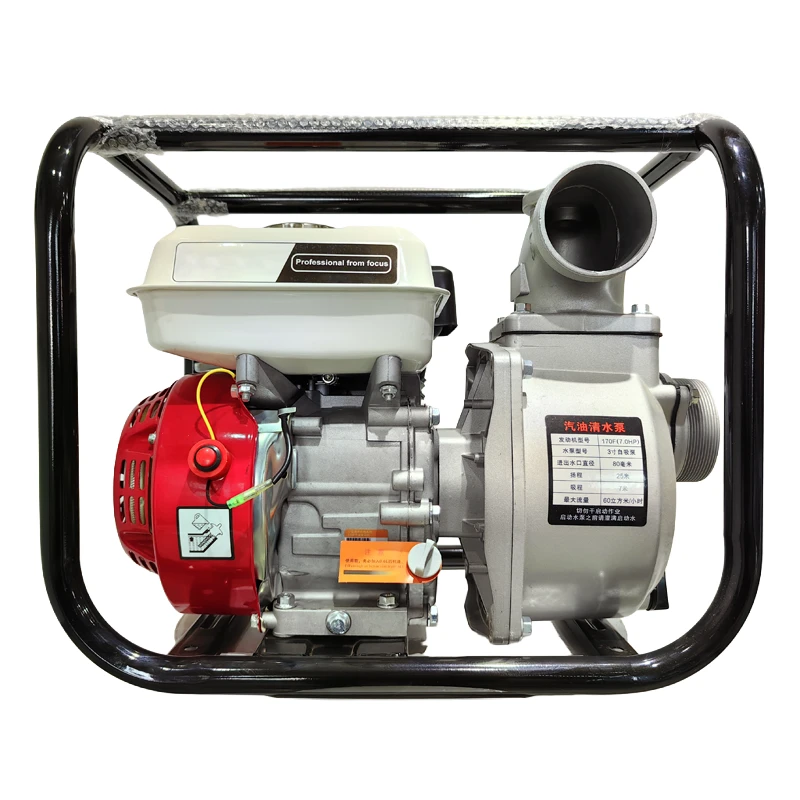
The agricultural water pump industry is gradually shifting toward high efficiency and energy conservation in tandem with the development of modern agriculture. Traditional mechanically driven products are being replaced by more energy-efficient electric pumps; meanwhile, continuous optimizations in motor efficiency, impeller design, and overall hydraulic structure serve to reduce energy consumption and enhance water delivery efficiency, thereby meeting agricultural demands for cost control.
Intelligence and automation represent other key trends. An increasing number of water pumps are being integrated with smart irrigation systems; by utilizing sensors to monitor soil moisture, water levels, and crop water requirements in real time, these systems enable on-demand water supply. Some units also feature remote control and scheduled start/stop capabilities, allowing for more precise and scientifically managed agricultural water use while minimizing waste.
Agricultural water pumps are evolving to suit diverse application scenarios; they are no longer limited to traditional irrigation but are widely used in greenhouse farming, water-saving irrigation projects, and emergency drainage systems. Furthermore, to accommodate varying water source conditions across different regions, products are being enhanced with features such as corrosion resistance, anti-clogging capabilities, and extended service life.
Driven by the principles of green agriculture and sustainable development, the industry faces increasingly stringent requirements regarding environmental protection and water conservation. Future pump products will place greater emphasis on low noise, low emissions, and high water-use efficiency. Additionally, the adoption of new energy technologies-such as solar-powered pumps-is gradually expanding, steering the industry toward a more environmentally friendly and sustainable future.