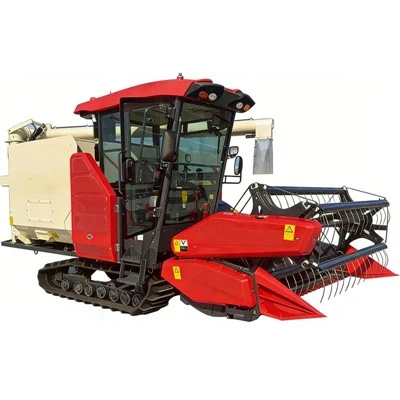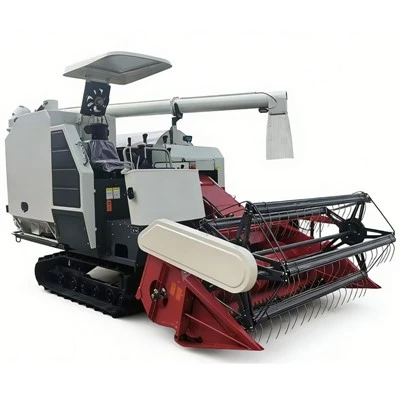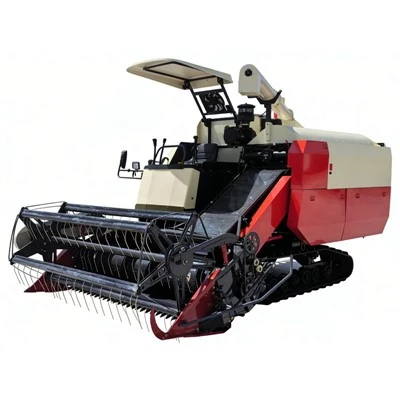
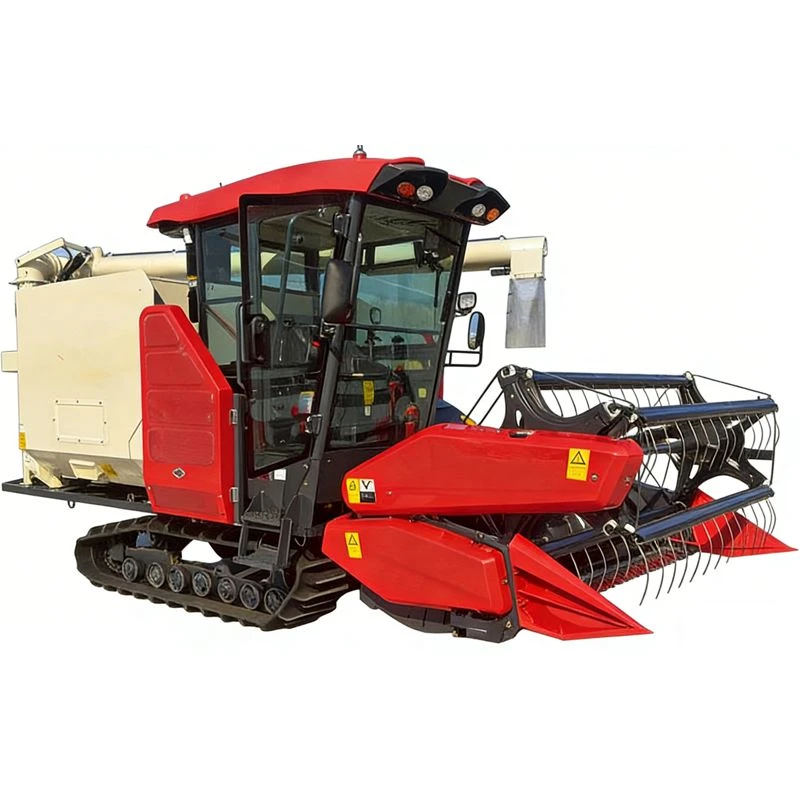
If you’ve ever driven past a rice field during harvest season and seen a massive, orange machine gliding effortlessly through the rows, you’re probably looking at a combine harvester paddy – and chances are, that machine’s not just cutting crop, it’s doing a dozen jobs at once to keep your paddy high-quality. I’ve been a supplier of rice combine harvesters for over a decade, and I still get farmers hitting me up saying, “Why does my neighbor’s paddy fetch $2 more a bushel than mine, even though we harvested the same day?” Nine times out of ten, the answer’s the machine they used – and how it’s set up, maintained, and operated. Let’s break down how these machines protect your paddy quality, without all the stuffy jargon that makes farm tech sound like rocket science.
First off, let’s start with the cutting part, because if you mess up here, you’re already losing quality before the paddy even leaves the stalk. A lot of folks mix up a combine harvester paddy with a regular grain combine, but rice is different – it’s taller, heavier, and the stalks are thicker, plus the paddy’s attached tight to the head, so you can’t just yank it off without breaking kernels. That’s where the right setup matters. Our machines have adjustable cutter bars, not the one-size-fits-all junk you see on cheap imports. If the cutter bar’s set too high, you’re leaving half the paddy heads on the ground – that’s a waste, and the paddy you do cut might have more dirt and straw mixed in. Set it too low, and you’re chopping up a bunch of stalks that turn into chaff, which gums up the rest of the machine and makes the final paddy dirty. I always tell new operators to adjust the cutter bar height based on how ripe the paddy is: if it’s dry (like when you’re harvesting two weeks after a dry spell), lower it an inch; if it’s still a little damp (common in humid climates), keep it an inch higher to avoid chewing up green stalks.
Then there’s the reel, that metal thing that spins over the cutter bar to pull the stalks into the machine. A lot of guys crank the reel speed to match the forward speed, but that’s a mistake. If the reel’s too fast, it yanks paddy heads right off the stalk before they’re fully dry, which cracks the kernels. Cracked kernels? They’re useless for milling – they turn into flour or get tossed out, and that’s a direct hit to your yield. If the reel’s too slow, it misses stalks, leaving unharvested paddy that will mold if it rains. Our combine harvester paddy models have variable-speed reels, so you can tweak it on the fly. Last year, a farmer in Arkansas came to me after using our machine, saying his crack rate dropped from 8% to 2% – that’s $15,000 extra for a 500-acre farm, just from adjusting the reel. I also recommend running the reel tines (the little prongs) a little below the paddy heads, not on top. That way, it pulls the stalk from the middle, not the top, so the head stays intact and kernels don’t get knocked loose.
Next, the part that most people overlook: the threshing and separation system. This is where the paddy kernels get separated from the rest of the plant, and if you mess this up, you’re either leaving kernels in the straw (wasting money) or breaking too many kernels (ruining quality). Rice has a thinner hull than wheat, so the threshing cylinder speed and concave gap need to be way different than what you’d use for corn. A lot of operators just set the cylinder speed to whatever the machine’s default is, but that’s not right for paddy. For dry paddy, you want a slower cylinder speed – around 800 to 1,000 RPM – and a wider gap between the cylinder and the concave. Too fast, and you bash kernels until their hulls break, turning good paddy into trash. Too slow, and you don’t get all the kernels out of the heads, so they get left in the straw and end up in the baled hay, which is a total waste.
Wait, and let’s not forget the separation shoe – that’s the part that sifts through the loose material to get the paddy kernels separate from chaff, straw, and dirt. On our combine harvester paddy machines, we have adjustable chaffer and sieve screens, not fixed ones. I can’t tell you how many farmers I’ve met who still use a 5-millimeter screen for every crop, but rice kernels are different sizes. Large, long-grain rice needs a wider screen, short-grain needs a tighter one. Also, the fan speed for the separation system is make-or-break. If the fan’s too strong, it blows good kernels out with the chaff. If it’s too weak, chaff gets stuck in the paddy, which means extra work cleaning it later, and the paddy might have mold spores from the damp chaff. Last season, a farmer in Thailand told me he used a generic screen he bought at a local shop, and his paddy had 12% foreign matter – after switching to our adjustable screens, that dropped to 2.5%. That’s the difference between selling your paddy as #1 grade or #3, which is a $30-per-ton difference.
Then there’s the cleaning system, which is the final stop before the paddy goes into the grain tank. This is where any leftover dirt, chaff, or broken kernels get removed, so your paddy is clean and ready for storage or milling. A lot of cheap combines have a basic fan and a single screen, but our machines have a two-stage cleaning system: first a pre-clean screen that gets rid of big straw bits, then a fine screen that sifts out small dirt and broken kernels. Also, we have a self-cleaning grain tank, which is a game-changer for quality. If the grain tank isn’t cleaned between fields, leftover paddy from the last crop can mix with your new harvest, especially if you’re switching from short-grain to long-grain. That cross-contamination kills your grade, because buyers don’t want mixed rice. I once had a farmer who tried to save time by skipping the grain tank clean, and his paddy got rejected because it had a tiny bit of wheat mixed in – cost him a $2,000 penalty just because he skipped a 10-minute cleanup.
Now, let’s talk about maintenance – because even the best combine harvester paddy in the world won’t work if you don’t take care of it. I see guys who use their machine for 10 years without replacing worn parts, and wonder why their quality drops. For example, the cutter bar blades: if they’re dull, they tear stalks instead of cutting them, which creates more chaff and breaks kernels. Sharpening the blades every 25 acres is a must – I know it’s a pain, but it takes 15 minutes and saves you a ton of headache later. Also, check the belts and chains on the reel and cylinder every day before you start harvesting. A loose chain can make the reel slow and uneven, leading to missed stalks, while a tight belt can slip and cause the cylinder to speed up, breaking kernels. And don’t forget to clean the machine after every use – especially the grain tank, the cleaning screens, and the auger that moves paddy into the tank. Any leftover moisture in the machine can cause mold to grow on the paddy, which ruins it in storage. I’ve had customers tell me their paddy went bad in the bin because they didn’t clean the combine after a rainy harvest, and that’s 100% avoidable.
Wait, and what about when you’re on the move? A lot of operators drive too fast through the field, and that’s a huge quality killer. If you’re going 5 mph in a rice field, that’s too fast – the machine can’t keep up with feeding stalks into the cutter bar, so you get uneven cutting, missed stalks, and more chaff. Our combine harvester paddy machines have a feed rate sensor that lets you know if you’re pushing too hard – it alerts you when the cylinder’s getting overloaded, so you can slow down before you break kernels. A few years back, a young farmer in Mississippi told me he was pushing 6 mph because he wanted to finish early, and his kernel breakage was at 10% – after turning to the feed rate sensor, he dropped to 3.5 mph, and his breakage went down to 1.8%. He told me that saved him $20,000 on his 600-acre farm, just by slowing down.
Also, let’s not talk about the other rice equipment that ties into this. You might be wondering, if the combine is the main machine, why does other equipment matter? Well, if you’re using a cheap rice cutting harvester that leaves a mess of stalks, the combine has to work harder to process it, which hurts quality. We sell farm equipment rice harvester that’s designed to work with our combine harvester paddy – the cutting height is matched, the stalk length is consistent, so the combine doesn’t have to adjust as much. That compatibility is key; a lot of farmers mix and match machines from different brands, and the end result is lower quality. I always tell folks, buy a combine and a rice cutting harvester from the same supplier, because they’re built to work together. It’s not just convenience – it’s quality.
Another thing: weather conditions. Rice is super sensitive to moisture, and the combine’s settings change depending on if the paddy is dry or damp. If you harvest paddy that’s more than 18% moisture, it’s going to mold in the grain tank, even if you clean it. Our combine harvester paddy has a built-in moisture sensor that reads the paddy as it comes in, and alerts you if it’s too damp. If the moisture is over 16%, you need to run the cylinder a little slower and the fan a little faster, so you dry the paddy as it’s harvested. If it’s too dry (under 12%), you need to widen the concave gap, because dry kernels break easier. A lot of farmers ignore that sensor, and end up with either moldy paddy or cracked paddy – both are bad.
Wait, and let’s talk about storage on the farm. Once the paddy is in the grain tank, you can’t just leave it there for a week while you finish a field. If the paddy’s damp, it will heat up in the tank, which causes mold and discoloration. Our combine harvester paddy has a grain tank aeration system that blows air through the paddy as it’s stored, keeping the temperature down and preventing mold. That’s a feature a lot of cheaper combines don’t have, and it makes a huge difference. I’ve had customers who used our aeration system tell me their paddy stayed grade 1 for two weeks after harvest, while their neighbor’s paddy turned grade 3 in three days.
Now, let’s address some common mistakes I see new farmers make. First, they buy the cheapest combine they can find, thinking all combines are the same. But a cheap harvester paddy doesn’t have the adjustable settings, the quality screens, or the maintenance features that our combine harvester paddy has. Second, they skip operator training. A machine is only as good as the person running it. Last year, we had a customer who rented a combine from a local shop, and he didn’t know how to adjust the reel, so he was breaking 15% of his kernels – after a 30-minute training session with our team, he got that down to 2%. Third, they don’t adjust for their specific crop. Every field is different – some paddy is long-grain, some is short-grain, some is mature, some is still green. You can’t use the same settings for all fields. I always say, “A good operator adjusts the machine five times a day; a bad one uses the same settings all day.”
If you’re a farmer looking to upgrade your combine harvester paddy, or even just replace a part that’s causing quality issues, we’ve got you covered. We also carry farm equipment rice harvester and rice cutting harvester that’s built to work seamlessly with our combines, so you don’t have to worry about compatibility. Whether you’re a small 50-acre farm or a 1,000-acre operation, we’ve got the right machine for you. Our Harvester Paddy models have all the quality features I talked about – adjustable cutters, variable reels, two-stage cleaning, and aerated grain tanks – so you can get the highest grade paddy possible.
At the end of the day, the quality of your harvested paddy isn’t just about the crop itself – it’s about the machine that harvests it, how you set it up, and how you maintain it. A combine harvester paddy that’s dialed in, properly maintained, and operated right will save you money on waste, get you a higher grade for your paddy, and make your harvest season way less stressful. If you’re tired of seeing your paddy get rejected or penalized because of harvest quality, reach out to us to talk about which machine is right for your farm. We can walk you through all the features, help you set up your machine correctly, and even give you tips on maintenance to keep your combine running at peak performance for years.

References:
- Rice Production Handbook, USDA Agricultural Research Service, 2021.
- Combine Harvester Operation and Maintenance Guide, International Rice Research Institute, 2022.
- Post-Harvest Quality Control for Rice, Food and Agriculture Organization of the United Nations, 2020.
- Modern Farm Equipment: Matching Machinery to Crop Needs, Farm Equipment Magazine, 2023.