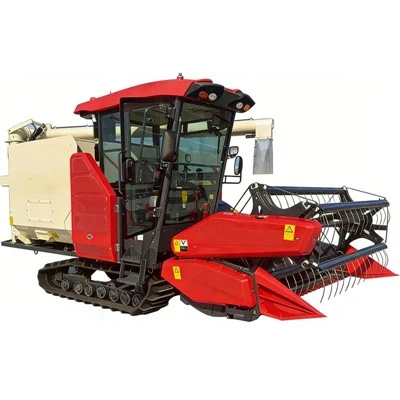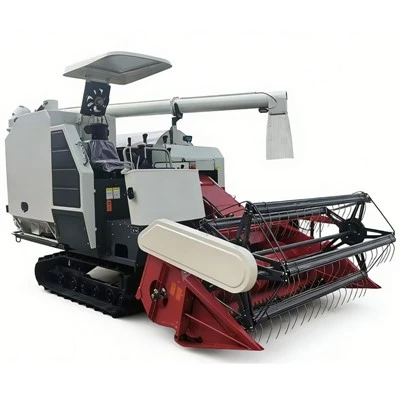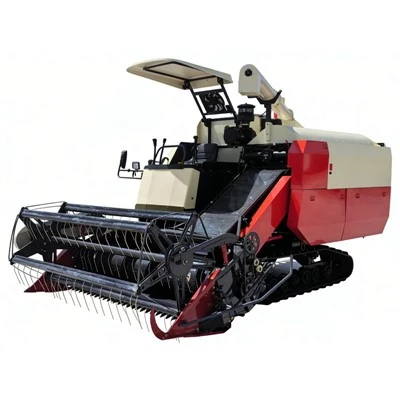
If you've ever walked through a rice field during harvest season, you've probably spotted combine harvesters in action-those loud, rumbling machines that cut, thresh, and clean crops all in one go. But if you're in the market for one, you might've wondered: what's the real difference between a small combine and a large one? As a combine harvester supplier who's worked with farmers for years, I get this question all the time. It's not just about size-there's a whole bunch of factors that tie into how each works, who it's for, and how it fits into their operation.
First off, let's break down what "small" and "large" actually mean here. For rice and paddy farmers (those growing the staple crop in a lot of places), small combines are usually 50 to 100 horsepower, while large ones clock in at 150 horsepower and up. But that's just a number on an engine spec sheet. The real gaps show up in performance, cost, and how well they handle different field conditions.
Let's start with the basics: crop throughput. That's the fancy word for how much grain a harvester can process in an hour. Small combines are built for smaller fields, uneven land, or areas where you can't maneuver a big machine easily. If you're farming a few acres of rice in a hilly region, or your fields are split into lots of small plots, a small combine's throughput is perfect-usually 2 to 5 tons of paddy per hour. Large combines? They're made for vast, flat fields, like the big rice farms in the U.S. Midwest, Southeast Asia's delta regions, or Brazil. Their throughput can hit 10 tons an hour or more, which cuts down harvest time drastically when you've got hundreds of acres to cover before the monsoon hits. I've seen a farmer with a 200-acre rice farm switch from a small to a large combine and cut his harvest time from two weeks to three days-game changer, right?
But here's the thing: it's not just about how much you can process. Small combines are way more flexible when fields aren't uniform. A lot of rice farmers don't have perfectly flat, square fields. Maybe there are muddy patches, drainage ditches, or rows that curve around small trees. Small combines are lighter-they're built with smaller engines, narrower bodies, and less weight, so they sink less in wet mud and can turn tighter without getting stuck. That's why you'll see a lot of small rice harvesters used in places like Vietnam's Mekong Delta, where fields are crisscrossed with irrigation canals. If you're in the market for one of these, check out the Farm Equipment Rice Harvester page-we've got small models built specifically for those tricky, uneven terrains.
Large combines, on the other hand, are all about power and efficiency for big, open fields. They come with bigger cutting platforms-some up to 40 feet wide, compared to 10 to 15 feet for small ones. That means fewer passes over the field, less fuel burned per acre, and less wear on the machine. But their downside? They're way less maneuverable. You can't turn a large combine around in a 10-foot row-you need space to pivot, and if a field has a lot of obstacles, you'll waste time navigating around them. Also, large combines need more maintenance. Their bigger engines have more parts, and if you're not running them regularly, you're looking at higher repair costs down the line.
Cost is another huge difference. Small combines are way more budget-friendly, both upfront and to run. A basic small rice combine might set you back $20,000 to $50,000, compared to $150,000 to $300,000 for a large model. Fuel costs? Small ones sip gas or diesel, using about 3 to 5 gallons per acre, while large guzzle 8 to 12 gallons. For a small farmer with 50 acres, that adds up fast-saving on fuel and upfront cost makes a big difference. But for a large farm with 500 acres, the time you save with a big combine often balances out the extra cost. It's a trade-off between capital and time, and that's where knowing your farm size is key.
Wait, but what about the type of crop? Rice and paddy are pretty specific-they grow in wet conditions, have tough stalks, and the grain needs to be threshed gently to avoid breaking. Small combines are designed with that in mind, too. Many small models come with a specialized paddy cutting header that handles wet, heavy stalks without clogging. If you're dealing with muddy fields where the crop's still damp, a small combine's lighter, more delicate mechanisms work better. But large combines? They've got heavy-duty threshing systems that can process a lot of wet paddy quickly, as long as the field is dry enough for the machine to move. We've got a ton of models tailored for paddy, so take a look at our Paddy Cutting Harvester page if you're focused on rice or paddy crops. One thing I always tell farmers: don't just pick a combine based on size. Think about how your fields grow-if your paddy is in muddy, small plots, a small harvester might be the way to go, even if you have a few extra acres.
Another factor: ease of use and maintenance. Small combines are simpler machines. They have fewer moving parts, so if something breaks, you can probably fix it in the field with basic tools. A lot of small farmers don't have a big service team on call, so that's a big plus. Large combines? They're like tractors on steroids-they have computerized systems, GPS for precision farming, and automated controls. That makes them easier to operate for long hours, but if a sensor or computer part breaks, you might have to wait for a specialist to come out, which can delay harvest. That's not a huge deal if you're on a big farm with a full service team, but it's a nightmare if you're a small farmer in a remote area.
Wait, I should mention that there's a middle ground, too. We've got mid-sized combines that bridge the gap-around 100 to 150 horsepower, 5 to 10 tons per hour throughput. They're great for farmers who are expanding their operation, or have a mix of small and large fields. I've seen a lot of young farmers start with a small combine and upgrade to a mid-sized one as they add acreage. It's a smart move because you don't have to jump from tiny to giant all at once.
But let's get back to the main question: which is better? It's not a one-size-fits-all answer. If you're a small-scale rice farmer with limited acreage, uneven fields, and a tight budget, a small combine is the way to go. It's cheaper, easier to maintain, and can get the job done without getting stuck or wasting space. If you're managing a large commercial rice farm with flat, vast fields and the capital to invest, a large combine will save you time and labor in the long run. But here's a tip I always share: test drive both if you can. If you're local, come check out our Harvester Paddy models-we let farmers run them on test plots to see which fits their land better.
Another thing to consider: storage. Small combines take up way less space. If you've got a small farm shed, a large combine won't fit. You'll need a bigger barn or a covered storage area, which is an extra cost a lot of people forget about. Small ones can even be stored in a garage if you're tight on space, though I don't recommend that for heavy farm equipment-rust is a real issue.
Let's talk about harvest season stress, too. Rice harvest has a narrow window-miss it, and the grain can shatter, get moldy, or the next crop can't be planted. For large farms, a large combine's speed means you can get the harvest done before the rains hit. For small farms, even a small combine might be fast enough, but if a small one breaks down, it's easier to fix and get back up and running before the window closes. I had a customer last year who was harvesting 30 acres of rice in the Philippines. His large combine had a hydraulic line break, and the service team was 3 hours away. By the time they fixed it, a quarter of his crop was ruined by rain. That's the kind of thing that makes small machines worth it, even for some mid-sized farms.
Wait, but don't write off large combines entirely for small operations. If you've got a few small plots, but you're renting a neighboring farmer's land, a large combine can handle both. You just have to plan your harvest route so you don't have to turn too much. It's a balancing act. That's why we put together our Combine Harvester Paddy line, which has flexible models that can adjust to different field sizes-they're not too big, not too small, just right for a lot of growing operations.
At the end of the day, the difference between small and large combines isn't just a matter of size or power. It's about matching the machine to your farm's specific needs. If you're still not sure which one is right for you, I'd love to chat. As a combine supplier who's worked with hundreds of rice and paddy farmers, I can walk you through your acreage, field conditions, and budget to find the perfect fit. Don't just pick the biggest machine you can afford-pick one that works for how you farm.
Before you go, if you're ready to look at our line of rice and paddy harvesters, check out our Rice Cutting Harvester page for more details. Whether you're a small family farmer or a large commercial operation, we've got models designed to get the job done right.
References


- Food and Agriculture Organization (FAO). (2022). "Combine Harvester Efficiency for Rice and Paddy Crops." Rome: FAO Agricultural Engineering Division.
- International Rice Research Institute (IRRI). (2021). "Field Machinery Requirements for Smallholder Rice Farms." Los Baños, Philippines: IRRI Technical Bulletin.
- American Society of Agricultural and Biological Engineers (ASABE). (2020). "Size and Performance Standards for Combine Harvesters." St. Joseph, MI: ASABE.