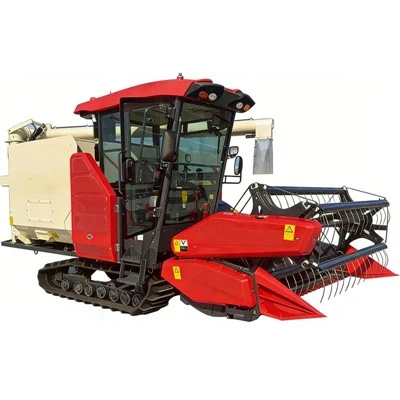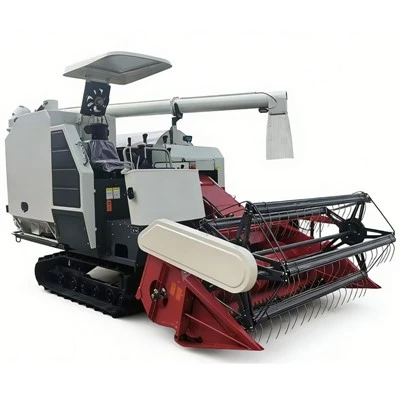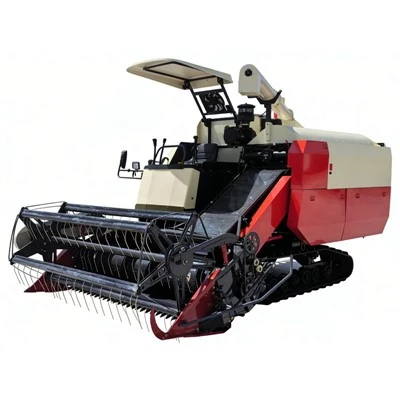
If you’ve ever walked through a rice paddy during harvest season, you know how demanding the work is—especially when the rice is tall, the fields are muddy, and the clock is ticking before rain sets in. As a supplier who’s spent years working with farmers across Southeast Asia and parts of Africa, I’ve seen first-hand how a good paddy cutting harvester can turn a back-breaking two-week job into a two-day operation. But here’s the thing: not all paddy cutting harvesters are created equal. Choosing the wrong model can lead to lost grain, broken parts, and wasted fuel—costs that hit smallholder farmers the hardest. Today, I want to break down the key differences between the main models, so you can make a choice that fits your field size, terrain, and harvest needs.
First, let’s set the stage: rice combine harvesters, also sometimes called combine harvester paddy or harvester paddy, aren’t a one-size-fits-all solution. The models we work with at our company are designed for different scales of farming, from small family plots to large commercial plantations. Let’s start with the smallest and most affordable option: the walk-behind paddy cutting harvester.
Walk-behind models are exactly what they sound like: a compact machine that’s operated by a person walking behind it, guiding it through the rows of paddy. These are ideal for small fields—usually under 1 acre—where space is tight, and maneuvering a larger machine would be impossible. For example, in the Philippines, many smallholder farmers use walk-behind harvesters because their fields are often split between family plots, with narrow paths between them. The pros here are obvious: low cost (typically starting around $3,000), light weight (around 200 kg), and easy to transport. But the cons? They’re slow—covering only 0.5 to 0.8 acres per hour—and require one operator plus someone to load the cut paddy into sacks. If you’re working in a area where labor is cheap, this might make sense, but if you have a larger field, this model will take far too long, leaving your crop at risk of shattering (that’s when ripe grain falls off the stalks before you can harvest it).
Next up is the riding-type self-propelled paddy cutting harvester. This is the workhorse for medium to large farms (10 acres or more) and is the most popular model among the farmers we partner with. Unlike the walk-behind version, this machine has a seat for the operator, a larger cutting platform, and a built-in threshing system—so it cuts, separates the grain from the stalk, and bags the rice all in one pass. The speed here is a huge upgrade: these models can cover 2 to 4 acres per hour, depending on the terrain. They also have better grain recovery rates—around 95%, compared to 90% for walk-behind models—because the threshing mechanism is more precise. But they do have downsides: they’re heavier (1,500 to 2,500 kg), so they can get stuck in muddy fields, and they’re more expensive (starting at $15,000). Some farmers also worry about fuel costs, which are higher than walk-behind models, but the time savings usually offset that. For example, a 20-acre farm would take a walk-behind harvester about 25 hours to finish, while a riding model would take 5 to 10 hours—meaning less exposure to bad weather, which is a critical factor in tropical regions.
Then there’s the tracked combine harvester paddy, a variation of the riding model designed specifically for muddy, waterlogged fields. Regular riding harvesters use rubber tires, which can sink into soft soil, especially right after heavy rain when paddies are flooded. Tracked models, on the other hand, have wide, metal tracks that distribute the machine’s weight over a larger area, so they can move through mud without getting stuck. This is a game-changer in places like the Ganges Delta, where fields are often still waterlogged when harvest season starts. The tracked model also has a lower ground pressure, so it doesn’t compact the soil as much, which is good for the next planting cycle. The trade-off? Tracks are more expensive to replace than tires, and the machine is slightly slower than a tire-based riding model (1.5 to 3 acres per hour). But for farmers in wet regions, the ability to harvest on schedule makes it worth the extra cost.
Now, let’s talk about the specialized models for ultra-large commercial farms: the combine harvester paddy with a header extension. These machines are built to handle fields of 50 acres or more, with cutting platforms that can be 12 to 16 feet wide—double the size of a standard riding harvester. They also have higher horsepower engines (100 to 150 hp, compared to 50 to 80 hp for medium models), so they can move faster and process more grain. Another feature is a large grain tank, which holds 50 to 100 bushels of rice, so you don’t have to stop every 15 minutes to unload. These models are usually paired with a grain cart that follows alongside, so the harvester can keep moving non-stop. For a commercial operation, this means cutting costs per acre—labor and fuel are spread over more acres, and you can finish a 100-acre field in 20 hours instead of 100. But these machines are not for small farmers: they start at $50,000, require trained operators, and need access to wide fields with no obstacles like trees or irrigation ditches.
Wait, but there’s another category that’s worth mentioning: the semi-automatic rice cutting harvester. These are a middle ground between walk-behind and riding models. They have a small engine, a cutting platform, and a seat, but they still require the operator to guide it manually and load the cut paddy. They’re lighter than fully self-propelled riding models (around 500 kg) and cheaper (starting at $8,000), making them good for farms that are too big for walk-behind models but not large enough for full self-propelled ones. We’ve seen a lot of small cooperatives invest in these, since they can split the cost between 3 or 4 families and share the machine across their plots.
Now, let’s get into the details that matter most to farmers: grain loss, fuel efficiency, and maintenance. I’ve worked with hundreds of farmers who told me their biggest headache is losing grain during harvest. Walk-behind models usually have higher loss rates because the operator has to adjust the cutting height and speed manually, and the threshing system is simple. Riding models, especially the tracked and header-extension types, have adjustable cutting platforms and calibrated threshing mechanisms that reduce loss to less than 5%. That might not sound like a big difference, but if you’re harvesting 10 tons of rice, 5% loss is 500 kg of grain—enough to feed a family for a month.
Fuel efficiency is another key point. Walk-behind models use about 1 liter of fuel per acre, while riding models use 2 to 3 liters per acre, and tracked models use a bit more, around 3.5 liters. But again, the time saved means you’re spending less on labor to get the job done. For example, a farmer with a 10-acre field might pay 5 workers $10 each per day to harvest by hand ($50 total), while using a walk-behind harvester would cost $30 in fuel and maybe $10 for a helper ($40 total), but take 10 hours. Using a riding model would cost $20 in fuel, no extra helper, and take 5 hours—so total cost is lower, and you finish faster before the rain.
Maintenance is where a lot of farmers get caught off guard. Walk-behind models have fewer parts, so they’re easier to repair in the field—no fancy tools needed, and most local mechanics can fix them. Riding models have more complex systems, including hydraulics, electronics, and a more sophisticated engine, so you might need a specialized mechanic for repairs. Tracked models add track maintenance—checking for tears, adjusting tension—which is another step. The large commercial models require even more regular maintenance, like cleaning the threshing drum and replacing the cutting blade every 50 hours of use. But here’s what I always tell farmers: investing in a model that matches your farm size reduces how often you need to use it, so maintenance time and costs add up less.
Let’s also talk about terrain. If your fields are on hilly ground, the standard riding model might not work well because it can tip over. We offer a limited model of paddy cutting harvester built for slopes, with a low center of gravity and a 4-wheel drive system that keeps it stable on 15 to 20 degree inclines. These are popular in parts of Indonesia and Thailand where rice is grown on terraced hillsides. Without that stability, you’d have to harvest by hand, which is slow and risky.
Another factor is compatibility with your other equipment. If you’re a farmer who already has a tractor, you might want to look at a tractor-mounted paddy cutting harvester, which attaches to the back of your existing tractor instead of being a separate machine. These are cheaper than self-propelled models (starting at $10,000) and use your tractor’s engine, so you don’t have to maintain a separate engine. The downside is that they’re slower—around 1 acre per hour—and require a separate tractor, but if you already own one, that’s a big plus. We link to a lot of these options in our catalog, including tractor-mounted models, which are a great middle step between hand harvesting and full self-propelled harvesters.
Now, I know what you’re thinking: with all these options, how do I choose? Let’s break it down by farm size:
- Under 1 acre: Walk-behind or tractor-mounted harvester.
- 1 to 10 acres: Semi-automatic or small riding model.
- 10 to 50 acres: Standard riding model.
- Over 50 acres: Header-extension or tracked model (if fields are muddy).
But it’s not just size—you also have to consider your budget, terrain, and access to mechanics. If you’re a small farmer with a tight budget, a walk-behind might be the only option, but if you can stretch a bit, a semi-automatic will save you time and reduce grain loss. If your fields are always muddy, skip the tire model and go for tracked.
I’ve seen farmers make the mistake of buying a large commercial model because it seems “better,” only to get stuck in their small fields and waste money. Or they buy a walk-behind for a 20-acre farm and take two weeks to harvest, losing half their crop to shattering. That’s why understanding the differences between models is so important. It’s not about getting the “biggest” or “most expensive” machine—it’s about getting the right machine for your needs.
At our company, we’ve spent years refining our paddy cutting harvesters to meet the needs of different farmers, from smallholders to large commercial operations. We offer everything from compact walk-behind models to heavy-duty tracked combine harvester paddy, so you can find a machine that fits your farm. If you’re not sure which model is right for you, our team can help you assess your field size, terrain, and budget to find the perfect fit. We also provide training and maintenance support, so you don’t have to worry about being stuck in the middle of harvest season with a broken machine.
If you’re ready to explore your options, you can check out our full range of paddy cutting harvesters, including walk-behind, riding, tracked, and commercial models, on our website. Whether you’re looking for a basic Rice Cutting Harvester for your family farm or a large-scale combine harvester paddy for your plantation, we have what you need. We also offer Farm Equipment Rice Harvester options that are durable, easy to use, and designed to maximize your yield.
Harvest season doesn’t wait for anyone. Choosing the right paddy cutting harvester can mean the difference between a profitable harvest and a loss, between spending two weeks bent over in the sun and finishing in a single day. Don’t rush into a choice—take the time to understand your needs, ask questions, and pick a machine that will work for you for years to come. If you’re ready to talk through your requirements, our team is here to help you find the right solution for your farm.
References:

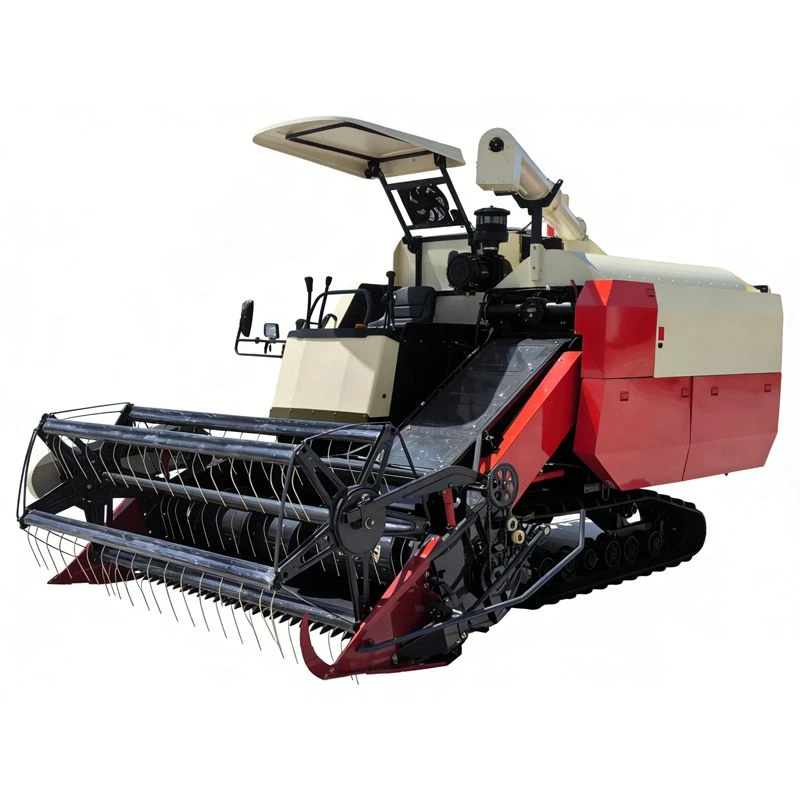
- Food and Agriculture Organization (FAO). (2021). Rice Harvesting Mechanization: A Guide for Smallholder Farmers. Rome: FAO.
- International Rice Research Institute (IRRI). (2020). Mechanization Challenges and Solutions for Rice Production in Southeast Asia. Los Baños: IRRI.
- Agricultural Machinery Association of India (AMAI). (2022). Comparative Analysis of Paddy Harvester Models and Their Performance Metrics. New Delhi: AMAI.
- Southeast Asia Regional Initiative for Community Empowerment (SARICE). (2021). Smallholder Farmer Adoption of Rice Harvesting Technologies. Bangkok: SARICE.
- World Bank. (2020). Rice Mechanization in Developing Countries: Costs, Benefits, and Policy Recommendations. Washington, D.C.: World Bank.