As a supplier of farm tractor implements, I’ve spent years working side-by-side with small-scale farmers and large farm operators who share one common frustration: balancing a tractor when using heavy attachments. I’ve seen too many operators wrestle with rear-end lift instability, front-wheel lift, or even tip-over accidents—mistakes that come from skipping basic balance principles, not from a lack of skill. The truth is, balancing a tractor with a heavy implement isn’t guesswork; it’s a mix of weight distribution, attachment placement, and operational adjustments that protect both your equipment and your safety. Whether you’re running a slice seeder for cover crops, a backhoe for digging fence posts, or any other heavy implement, let’s break down how to get this right.
First, let’s start with why balance matters, especially when you’re using implements from our catalog of Farm Tractor Implements. Tractors are designed with a specific center of gravity (CoG)—the point where the entire weight of the machine is evenly distributed. When you add a heavy implement to the three-point hitch, that CoG shifts backward. For smaller tractors, this shift is even more dramatic; a compact 25 horsepower model might have only 1,500 pounds of front-end weight, so adding a 1,200-pound rear implement can lift the front wheels right off the ground. That doesn’t just make steering wobbly—it reduces traction, slows you down, and creates a major safety hazard.
I remember a farmer named Raj who reached out to me last spring. He’d bought a Small Farm Tractor Implements package that included a Tractor Slice Seeder and a rear rake, and he spent the first two weeks frustrated because his front wheels kept lifting when he planted cover crops. He told me he’d nearly tipped over twice when turning on a sloped field. We worked through his setup, and within an hour, he was back to planting without any balance issues. The mistake he made? He only adjusted the lower links of the three-point hitch, not the upper link, and skipped adding front-end weights. Let’s walk through the steps I shared with Raj, and that I recommend to every farmer working with heavy implements.
The first step to balance is calculating your implement’s weight and matching it to your tractor’s front-end capacity. Most tractors have a “maximum front weight limit” listed in their operator’s manual—this is the amount of weight you can add to the front to counterbalance rear implements. For every 100 pounds of rear implement weight, you generally need 50 to 70 pounds of front counterweight. Wait, that’s not a hard rule—let’s be scientific here: the formula for dynamic balance (when the tractor is moving, not just stationary) is to aim for 60% of the total tractor weight on the rear wheels and 40% on the front. That split gives you the traction for pulling the implement and the steering control to avoid lift.
Let’s use Raj’s example: his 30 horsepower compact tractor weighs 2,400 pounds total, so he needed 960 pounds on the front and 1,440 on the rear. The slice seeder he was using weighed 1,100 pounds, plus the rake added another 300 pounds—1,400 total rear implement weight. His tractor’s rear axle already carried 1,800 pounds (the tractor’s own weight, split front to rear). Subtract the 1,400-pound implement, and his rear axle was only left with 400 pounds—way below the 1,440 needed for balance, so the front had to lift. We added 560 pounds of front weights (cast iron wheel weights, available in our Farm Tractor Implements line) and adjusted the hitch, and suddenly his weight split was 980 front, 1,420 rear—almost exactly the 40/60 ratio he needed.
Next, hitch placement is make-or-break, especially for implements like a Backhoe Attachment for Farm Tractor, which is extremely heavy and has a lot of leverage. The three-point hitch has three connection points: two lower links and one upper arm (also called the top link). Most operators only adjust the lower links to control depth, but the upper link’s length is critical for balance. For rear-mounted implements, you want the top link to be tight enough to prevent the implement from swinging side-to-side, but loose enough that it can pivot slightly as the tractor moves over uneven ground. For implement balance, the implement’s weight should be as close to the tractor’s rear axle as possible. When you move an implement 12 inches closer to the rear axle, its effective weight on the hitch drops by about 20%—that’s a huge difference for balance.
Raj had his slice seeder hanging 18 inches behind the hitch’s rear attachment point. We moved it 10 inches forward, so it was just 8 inches behind the axle, and that reduced the effective rear weight by 17%, which cut his need for front weights by almost 200 pounds. I also tell farmers to use the implement’s transport mode when moving between fields. Most heavy implements can be raised high enough for road travel, but if you lift them too high, that shifts the CoG even higher, making the tractor more prone to tipping on slopes. Keep implements low when you’re moving, and only raise them when you’re planting or working, and even then, keep them as low as safely possible.
Another common mistake is forgetting about implement type when balancing. A Tractor Slice Seeder is a relatively flat, rear-heavy implement that’s easy to balance, but a backhoe (which has a boom that extends backward and can swing side-to-side) is a whole different challenge. For backhoes, you want to distribute their weight evenly, so you never extend the boom fully backward when the tractor is stationary—this creates a huge leverage force that can tip the tractor over. If you’re digging with a backhoe, keep the boom close to the tractor when possible, and if you have to extend it, make sure someone isn’t sitting on the rear bumper (that adds unbalanced weight). I had a customer last year who tried to dig a 6-foot hole with his backhoe, and when he extended the boom all the way back, his front wheels lifted 3 feet off the ground. He didn’t get hurt, but he did damage a fence when the tractor swung backward. For backhoes, it’s also a good idea to use side stabilizers—they’re not just for digging, they also help distribute weight so the tractor doesn’t tip.
Operational adjustments are just as important as physical setup. When you’re using a heavy implement, avoid sudden acceleration or deceleration. Jerking the tractor forward or backward creates dynamic weight shifts—if you hit the gas too hard, the rear wheels spin, and the front lifts; if you slam on the brakes, the weight shifts forward, which can make the rear wheels lose traction or even flip the tractor backward when combined with a rear implement. Raj used to drive his tractor at full speed when planting, which made the front wheels bounce. We told him to keep his speed at 3 to 5 miles per hour for planting, and that smooth, steady speed balanced the tractor’s dynamic weight—no more bouncing, and no more front-wheel lift.
Also, pay attention to terrain. If you’re working on hilly ground, the balance rules change. On a slope, the CoG shifts to the downhill side, so you want to add extra weight to the uphill side of the front and rear of the tractor. If you’re planting on a 10-degree slope, adding 10% more weight to the uphill front can prevent the tractor from sliding or tipping. I always recommend using implement-specific balance guides, which you can find in the product manual for implements like the Agriculture Tractor Implements we sell. Most manufacturers include weight calculations and slope adjustments in their manuals, so don’t skip reading that small print.
Let’s circle back to Raj’s story, because it shows how simple balance fixes can transform your work. After adjusting his front weights, hitch placement, and driving speed, he told me he cut his planting time by 20%—no more stopping to re-adjust the tractor, no more worry about tipping. He also saved money on fuel, because the tractor was running more efficiently when balanced. That’s the big win here: balance doesn’t just prevent accidents—it makes your equipment work better, saves you time, and extends the life of both your tractor and your implements.
If you’re still struggling with balance, the first step is to check your tractor’s manual for its weight specifications and front/rear weight limits. Then, weigh your implement—most of us don’t have a farm scale, but you can estimate weight by looking at the product details (all our Farm Tractor Implements page includes implement weights). If you’re using a Backhoe Attachment for Farm Tractor, don’t guess its weight—call our team, and we’ll send you the exact specs, plus balance tips tailored to your tractor model.
Remember, balance is not a one-time setup. If you switch implements, change fields, or even adjust your tire pressure, you need to re-check balance. I’ve had farmers who set up their tractor once for a slice seeder, then switch to a rear blade, and wonder why it’s suddenly unstable. Small changes like that can throw off your 40/60 weight split, so make a habit of checking balance every time you attach a new implement.
For farmers running small tractors, this is especially critical. Compact tractors have less margin for error, so a heavy implement combined with bad balance can lead to a tip-over that costs thousands in repairs, or worse, injury. Our Small Farm Tractor Implements line is designed for lighter tractors, and we include balance guides with every product to make setup easy.

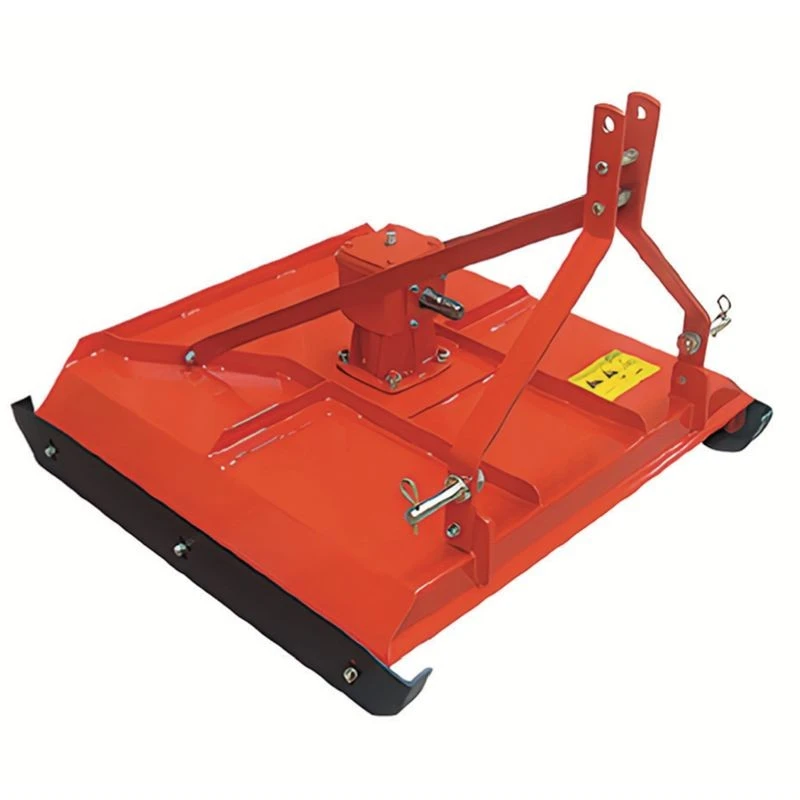
If you want to learn more about balancing your tractor with heavy implements, or if you need help choosing the right implements for your farm, reach out to our team for personalized guidance. We don’t just sell farm tractor implements—we work with farmers to make sure their equipment works as hard as they do, safely and efficiently.
References:
- American Society of Agricultural and Biological Engineers (ASABE). (2020). Agricultural Tractor Stability and Weight Distribution Standards. ASABE S335.7.
- National Farm Medicine Center. (2021). Tractor Tip-Over Prevention Guidelines for Small-Scale Farm Operations. Marshfield Clinic Research Institute.
- Tractor Equipment Manufacturers Association (TEMA). (2019). Three-Point Hitch Optimization for Heavy Implement Attachments. TEMA Technical Bulletin 412.
- University of Extension Systems. (2022). Compact Tractor Balance and Operation: A Practical Guide for Farmers. Cooperative Extension Service, Purdue University.