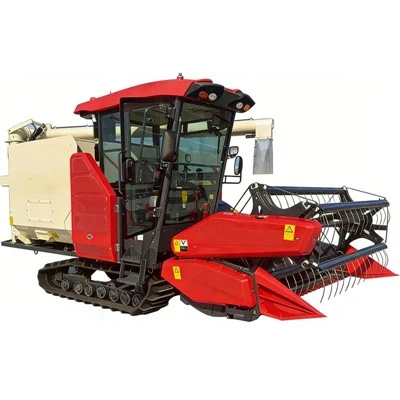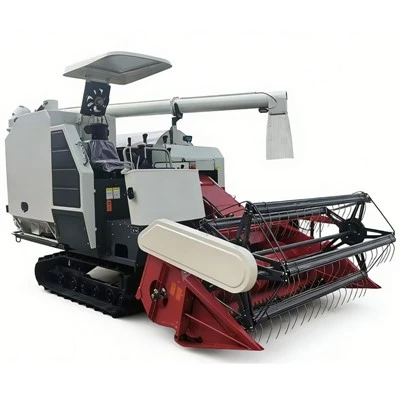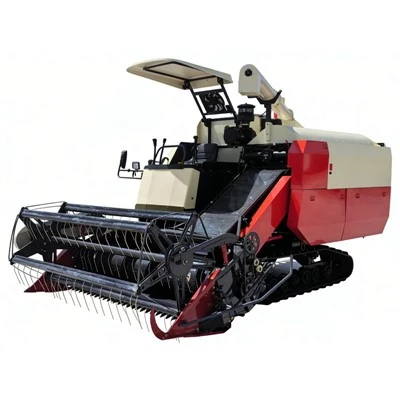
If you’ve ever stood beside a rice field during harvest season, you’ve likely watched a massive machine glide through the green-gold rows, turning stalks into neatly bundled sheaves in a matter of minutes. That machine, a combine harvester paddy, is a masterpiece of agricultural engineering, designed to cut, thresh, clean, and bag rice in a single pass—cutting down harvest time from weeks to mere days and saving millions of farmers around the world from backbreaking manual labor. But while most people focus on the whirring blades or the grain tanks, the unsung hero of this operation is the cab of the combine harvester paddy. As a supplier of farm equipment rice harvesters, I’ve spent years helping farmers get the most out of their machines, and I can tell you: the cab isn’t just a place for the operator to sit. It’s the command center, the safe space, and the key to every part of a successful harvest.
Let’s start with the most obvious but most critical function: operator control and precision. When you’re harvesting paddy, every inch matters. If a combine cuts too high, it leaves stalks behind that are hard to collect later and wastes grain that would have been milled. If it cuts too low, it might scrape the soil, picking up dirt, rocks, and debris that can damage the machine or contaminate the rice. The cab puts the operator directly in charge of those adjustments. Inside, you’ll find a dashboard loaded with controls—steering levers, speed regulators, blade height adjusters, and settings for threshing and cleaning. Take the Paddy Cutting Harvester we supply, for example: its cab has a color-coded control panel that lets operators tweak blade height in real time, even when the fields are misty or dusty. No more guessing where to set the blades; the cab’s controls put that decision right at your fingertips.
Precision isn’t just about cutting height, either. Modern combine harvester paddy models, like the Combine Harvester Paddy line, have GPS and telematics built into the cab. Operators can map out their fields beforehand, setting boundaries to avoid overlapping areas or missing spots, and track how much grain they’re harvesting per hour. That data feeds directly into the cab’s display, so you can see exactly where your machine is, how much rice you’ve collected, and if any part of the process is off. For farmers with large fields—think hundreds of acres across multiple plots—this level of precision is a game-changer. It cuts down on waste, reduces fuel use, and makes the entire harvest more efficient. Without the cab’s integrated control system, all that technology would be useless.
Next, safety. Harvesting paddy is a dangerous job. Combine harvesters move at high speeds, have moving blades and threshing drums that can cause serious injury, and often operate in remote areas with limited medical access. The cab is designed to protect the operator from these risks. First, it’s a reinforced, rollover-protective structure (ROPS)—a steel frame that wraps around the operator, so if the machine tips over on uneven terrain, the cab stays intact. That’s not a trivial feature: in rice fields, the ground can be soft and muddy, and one wrong move can send a combine sliding. I’ve heard stories from farmers who avoided serious injury because their cab’s ROPS held up during a roll, and that’s why every Harvester Paddy we sell is built with this standard.
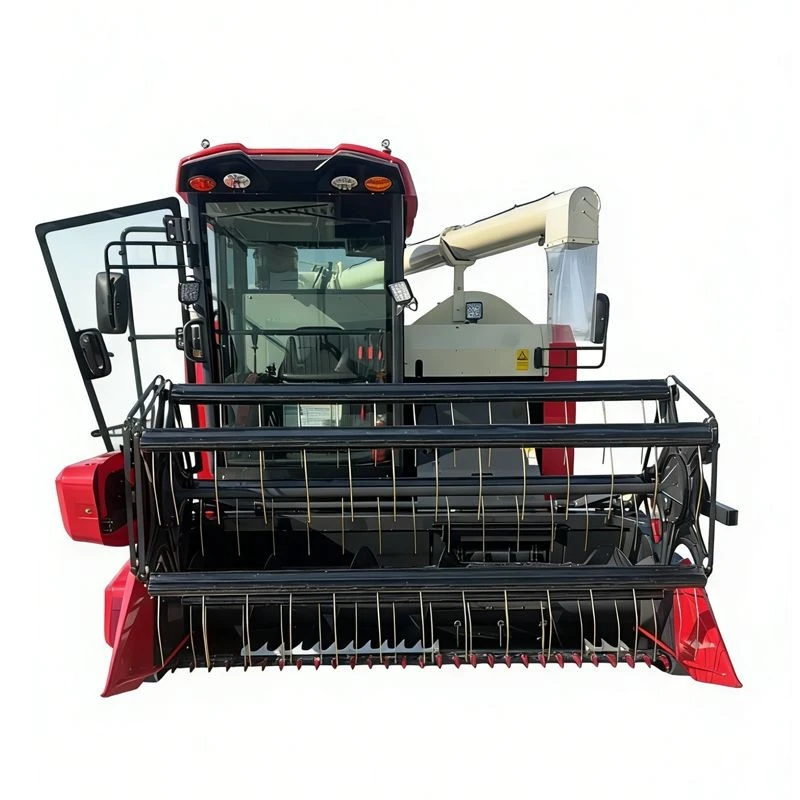

But safety goes beyond the frame. The cab also seals out dust, noise, and debris. When a combine is running, it kicks up a cloud of rice stalk dust, chaff, and sometimes small rocks. Breathing that in over a full harvest season can cause respiratory problems, so the cab has a pressurized air filtration system that keeps the air clean. The walls are insulated, too, cutting down on the deafening roar of the engine and blades. I’ve sat in an open-side old harvester next to a modern cab, and the difference is night and day—no more ringing ears at the end of the day, no more choking on dust. That’s not just comfortable; it’s necessary for the operator’s long-term health. A farmer who can’t hear or breathe properly can’t make safe decisions, so the cab’s safety features directly impact the entire harvest.
Comfort, surprisingly, ties into efficiency. A harvest can last 12, 14, even 16 hours a day, depending on the weather. If the operator is sitting in an uncomfortable, noisy, or hot space, they’ll get tired quickly, make mistakes, and the harvest will slow down. The cab is designed to prevent that. Modern models have ergonomic seats with lumbar support, adjustable armrests, and climate control—air conditioning in hot climates, heating in cooler ones. There are cup holders, storage for water and snacks, and even USB ports for phones or radios, to keep the operator alert during long shifts.
I remember a farmer in Vietnam who bought one of our Rice Cutting Harvester models last year. He told me that before, he and his son would take turns driving an old combine, switching every 4 hours because the cab was so bad. With the new cab, he can drive 8 hours straight without feeling sore or tired, and his son can use the extra time to work on other parts of the farm. That’s the real value of comfort: it lets the operator stay focused for longer, which means the field is harvested before a rainstorm hits (a critical point—rice gets moldy if it’s wet during harvest). The cab doesn’t just make the operator happy; it protects the farmer’s entire investment in the crop.
Another key function is monitoring the harvest process in real time. When the combine is moving through the field, it’s doing three main things: cutting the stalks, threshing them to separate the grain from the chaff, and cleaning the grain to remove any remaining debris. If any of these steps go wrong—if the threshing drum is too fast and breaks the grain, or the cleaning system is clogged with chaff—the whole process is ruined, and you end up with wasted grain. The cab has sensors that track every part of this process, with alerts that pop up on the display if something’s off.
For example, if the cleaning system is clogged, the cab will sound an alarm, and the operator can stop the machine, clear the clog, and get back to work without waiting for the grain tank to be full. That level of monitoring is only possible from the cab, since the process is happening right in front of the machine, out of sight. As a supplier of farm equipment rice harvesters, we design our combines to make this monitoring as easy as possible—so the operator doesn’t have to climb in and out of the machine every 10 minutes to check the thresher. That saves time and reduces the risk of accidents from stepping into muddy fields.
Beyond these practical functions, the cab is also about operator well-being in a broader sense. Rice farming is not just a job; it’s a way of life for millions of people. Many farmers have worked the same land for generations, and they take pride in their work. A good cab doesn’t just protect their body or their crop—it lets them feel proud of the machine they’re using to care for their land. It’s a space where they can work with confidence, knowing their equipment is reliable, safe, and efficient. I’ve had farmers tell me that driving a modern combine cab feels like operating a high-end truck or even a small car, and that makes them more motivated to do their best work. That cultural and emotional aspect is something I never would have thought about when I first started in this business, but it’s become clear over time: the cab is as much a part of the farmer’s connection to their work as the fields themselves.
Let’s talk about durability, too. Paddy fields are harsh environments—mud, water, salt from irrigation, and constant exposure to the sun. The cab has to hold up to all that. The frame is made of rust-resistant steel, the windows are shatterproof, and the seals are designed to keep water out even when the machine is driving through shallow puddles. I’ve seen combines that were 10 years old, and their cabs still looked good as new, because they’re built to withstand the elements. That’s important because a cab that breaks down in the middle of harvest can bring the whole operation to a halt. When a farmer is counting on their combine to get the rice in before monsoon season hits, the cab can’t fail. That’s why we use high-quality materials in every cab we install on our Combine Harvester Paddy and other models.
Now, let’s put this all together. The cab of a combine harvester paddy isn’t an afterthought. It’s the core of the machine’s performance, the operator’s safety, and the success of the harvest. It controls precision cutting, protects the operator from danger, keeps them comfortable during long hours, monitors every step of the process, and withstands the tough conditions of rice farming. As someone who supplies farm equipment rice harvesters, I’ve seen how a good cab can turn a stressful, unreliable harvest into a smooth, efficient one—and I’ve seen how that changes a farmer’s life.
If you’re in the market for a combine harvester paddy, it’s easy to focus on the size of the grain tank or the power of the engine. But don’t overlook the cab. Ask about the control features, the safety ratings, the comfort design, and how it handles the specific conditions of your fields. Whether you have a small plot of 50 acres or a large operation of 500, the cab will make a bigger difference than you think.
If you’re ready to upgrade your harvesting equipment or learn more about how our Paddy Cutting Harvester or Harvester Paddy models can help your farm, we’re here to help. Our team has years of experience working with rice farmers around the world, and we can answer any questions you have about cab design, machine performance, or after-sales support. Contact us today to arrange a consultation and see how our equipment can make your next harvest better.
References:
- Food and Agriculture Organization of the United Nations. (2021). Small-Scale Rice Harvesting Technologies. Rome: FAO.
- American Society of Agricultural and Biological Engineers. (2020). Safety Standards for Agricultural Machinery Cab Structures. St. Joseph, MI: ASABE.
- International Rice Research Institute. (2019). Mechanization Challenges for Smallholder Rice Farmers in Asia. Los Baños, Philippines: IRRI.
- Agricultural Equipment Technology Institute. (2022). Ergonomic Design Features for Modern Combine Harvesters. Ames, IA: AETI.
- World Bank. (2021). Agricultural Mechanization and Productivity in Rice Farming. Washington, DC: World Bank Group.